This new paper in PLOS Computational. Biology may be of interest: : The application of project-based learning in bioinformatics training by Emery LR and Morgan SL. Although many out there may already be doing projects based learning for bioinformatics, many others are not. This paper discusses how the authors added a projects component to an existing course …
Registration reminder: MoBE registration closes September 1st. Join us to hear the latest in MoBE research, to discuss applications and future directions. Check out MoBE tweets: @microBEnet #MoBE #microBEnet
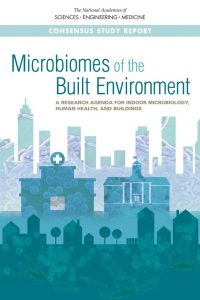
So this is the culmination of a huge amount of work by a large number of folks. The National Academy of Sciences (NAS) just released a new report “Microbiomes of the Built Environment: A Research Agenda for Indoor Microbiology, Human Health, and Buildings”. This report was requested by the Alfred P. Sloan Foundation, the National …
A few years ago I was hearing increasing discussion about the idea that much of the microbiology of the built environment was “stamp collecting” and that the indoor microbiome might consist largely of dead or non-viable material passively deposited indoors. Many pweople argued that there was a need for better tools (or increased use of …
In the world of built environment (BE) microbiome research, we are by now well aware that building designs have influences on the indoor microbial assemblage. Therefore, BEs that employ a multitude of innovative designs, such as green and zero carbon buildings (GBs and ZCBs), may provide us greater insight on the mechanistic basis for …
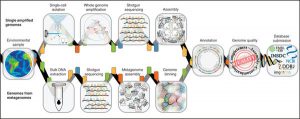
Of possible interest – a new paper (on which I am a coauthor) on standards for minimum information about single cell genomes and genomes assembled from metagenomes. See link below: Source: Minimum information about a single amplified genome (MISAG) and a metagenome-assembled genome (MIMAG) of bacteria and archaea : Nature Biotechnology : Nature Research
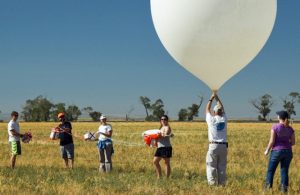
When I first saw the headline on this I groaned a little, thinking this was some completely bogus type of project. But actually, upon reading about it in more detail it sounds like a really good public engagement project involving the eclipse, students, space, and microbes. The article: Most-watched eclipse in history could answer the …
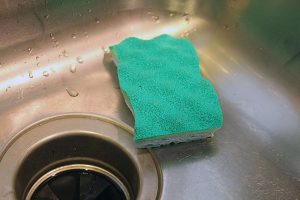
This is a worthwhile read – from Judy Stone – on germs on kitchen sponges. “The brouhaha about germs on kitchen sponges is much ado about nothing. Put it in perspective with these tidbits.” Source: Germs On Your Kitchen Sponge? Get a Grip!
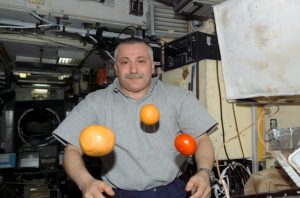
Microbes in space have been of interest to the folks at various space agencies for as long as we’ve been sending people into space. Rampant mold growth on the Russian Space Station Mir was probably one of the reasons for the decision to “deorbit” the station (a fancy way of describing crashing into the ocean). …
Just a quick post here, on behalf of Clarisse Betancourt, formerly of the BioBE Center. The new Center for Microbial Systems at the University of Michigan is looking for a lab tech. Summary below. The Center for Microbial Systems Molecular Biology Laboratory offers high throughput automated DNA extraction and Next Generation Sequencing (NGS) using the …