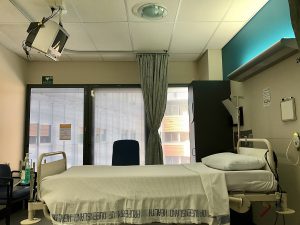
This article (“Collection of SARS-CoV-2 Virus from the Air of a Clinic within a University Student Health Care Center and Analyses of the Viral Genomic Sequence”) caught my attention initially because of the air sampling aspect, but upon reading the Abstract I was struck by something else. Here they did air sampling in a …
This is a must-read article for folks thinking about mitigating the risk of COVID-19 indoors. A venerable author list, including many experts on all aspects of indoor ventilation, pathogen transmission, aerosol science, etc. Since it is a review, it’s hard to summarize. Basically they argue that the current status of the science on indoor microbiology …
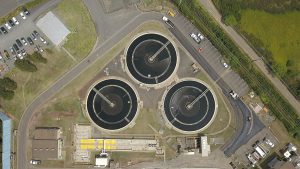
Yet another wastewater surveillance study for SARS-CoV-2. Seems to be the hot topic these days. This is a great paper by Jordan Peccia and colleagues. They collected wastewater samples over the course of a couple months and saw how well those correlated with testing data and hospital admissions. Not only were the correlations extremely high, …
We are pleased to announce the publication of our manuscript titled “Modeling microbial growth in carpet dust exposed to diurnal variations in relative humidity using the “Time-of-Wetness” framework” in the journal Indoor Air. This work is a culmination of research investigating how changes in relative humidity impact microbial growth in carpet dust. Our related study …
Authored by Kevin Van Den Wymelenberg, University of Oregon, Professor of Architecture and Director for the Institute of Health in the Built Environment and Mark Fretz, Research Assistant Professor and Director of Knowledge ExchangeLives & Livelihoods, the UnSeen Hope to Reopen How are we going to balance decisions about increasing acute risks to human life …
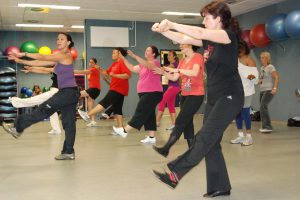
Only somewhat related to the Built Environment, but still some mention of occupant density and airflows within a confined space. This short article is a description of an outbreak of COVID-19 in South Korea that took place in several fitness dance classes there. Key point; “Vigorous exercise in confined spaces should be minimized during outbreaks”. …
In this post I’m going to share the published (relatively minor) corrections to our review on COVID19 and the Built Environment and use that as a hook to argue for the value of peer review. I’ve posted previously on our rush effort to get this paper out as quickly as possible, it was only about …
So our collaborators from the Biology of the Built Environment (BioBE) Center at the University of Oregon have been working hard to get their environmental sampling qRT-PCR assays for SARS-CoV-2 up and running. I’m sure we’ll be posting more about their results as they develop. But they are now offering their testing as a service …
We’ve posted recently a few times (here, here, and here) about the idea of doing wastewater surveillance for SARS-CoV-2 (and we’ve just submitted a grant on this as well). In those cases the focus is on detecting RNA from the virus and using that to guide community health decisions such as when to end (or …
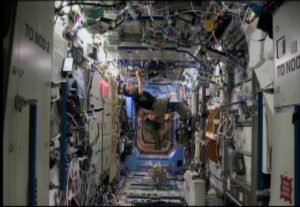
(h/t to Mark Martin for posting about this on Twitter) A break from COVID-19… Microbes in Spaaaaaaaaaace. (it never gets old). This article entitled “Crewmember microbiome may influence microbial composition of ISS habitable surfaces” is a much needed addition to the literature on the ISS microbiome. Work from our lab an others has examined the …